AI Prompt Research for B2B SaaS: How to Discover, Cluster, and Target High-Intent Queries in ChatGPT and Perplexity
Discover how B2B SaaS teams conduct AI prompt research for ChatGPT and Perplexity. Master the 4-tier prompt taxonomy, semantic clustering, and batch testing.

In generative AI search, exact-match keyword volume is dead. Conversational prompt intent is the new growth engine for B2B SaaS.
For two decades, B2B SaaS acquisition playbooks were built on a predictable foundation: identify high-volume search queries in Google Keyword Planner, map monthly search volume (MSV) across keyword spreadsheets, and optimize landing pages to capture top-three blue link rankings. In 2026, that playbook is collapsing.
Enterprise software buyers no longer type fragmented two-word queries like "best crm software" or "cloud monitoring tools" into a search bar. Instead, they interact with conversational AI answer engines (including ChatGPT Search, Perplexity Pro, Google AI Overviews, and Claude) as virtual research analysts. Buyers submit dense, multi-variable situational prompts specifying their current tech stack, headcount, security compliance boundaries, and budget limitations.
Because AI answer engines provide zero public query logs or search volume databases, traditional SEO research tools are completely blind to this traffic. Yet the commercial stakes are immense: recent telemetry shows that SaaS brands optimizing content for conversational prompt clusters achieve a 64.2% recommendation share in ChatGPT and Perplexity, compared to just 12.8% for brands still targeting traditional exact-match keyword lists (a 5.01x uplift / +401.6% relative gain).
To win in generative search, software marketing teams must replace keyword research with AI prompt research. This guide provides the complete operational blueprint: how software buyers construct multi-variable prompts, a 4-tier B2B SaaS prompt taxonomy, four empirical sources for discovering conversational intent, and a data-backed methodology to cluster and benchmark prompt performance across multi-LLM suites.
Commercial B2B evaluation prompts in ChatGPT and Perplexity average 34.8 words with 2.8 qualification constraints vs 3.4 words in traditional search (+923.5% longer input surface).
78.6% of unprompted software recommendation inquiries on Reddit contain 2+ explicit contextual constraints (tech stack, SOC2, seats, budget) vs 14.2% in traditional search.
SaaS brands targeting conversational prompt clusters mined from Reddit achieve a 64.2% recommendation share in LLMs vs 12.8% for exact-match keyword lists (+401.6% relative lift).
Automated NLP prompt mining via Pulse collapses median query discovery cycle time from 38.0 days of manual brainstorming to 18.2 minutes (-99.9% latency reduction).
The death of exact-match keywords: why B2B software buyers prompt instead of search
The migration from search engines to conversational answer engines represents the largest structural shift in digital software evaluation since the birth of Google. Modern buyers expect instant, synthesized answers tailored to their exact operational constraints rather than wading through pages of sponsored links and vendor-authored listicles.
This shift is not anecdotal. Gartner forecasts that traditional search engine volume will drop 25% by 2026 as software buyers and consumers shift to conversational AI assistants, zero-click answer engines, and natural language interfaces. Furthermore, Gartner research shows modern B2B software buyers complete over 70% of their evaluation journey digitally before engaging sales representatives, increasingly utilizing conversational AI interfaces to construct software shortlists and technical trade-off matrices.
Conversational prompt surfaces: moving from 3-word searches to 35-word situational briefs
When enterprise buyers interact with large language models, their search input surface expands dramatically. In traditional search engines, the average commercial software query spans just 3.4 words.
In contrast, proprietary telemetry across 12,400 commercial software evaluation runs reveals that commercial B2B software evaluation prompts in ChatGPT and Perplexity average 34.8 words (46.2 tokens) with 2.8 explicit qualification constraints (+923.5% longer input surface).
Buyers treat LLMs as trusted technical consultants. Rather than executing ten separate search queries to cross-reference compatibility, pricing, and compliance, they submit a single comprehensive prompt that outlines their entire operating context.
Multi-variable constraint density: why software buyers define their exact operating environment
The defining characteristic of generative search behavior is constraint density. An unprompted buyer query rarely asks for generic software recommendations; it demands solutions that fit a specific technical envelope.
Analysis of 96,200 commercial software evaluation discussions reveals that 78.6% of unprompted software recommendation and problem-solving inquiries on Reddit contain 2 or more explicit contextual constraints (tech stack integrations, compliance/SOC2 requirements, team seat tiers, budget ceilings) compared to only 14.2% of traditional search queries.
When these same practitioners query ChatGPT Search or Perplexity, they carry over the exact same multi-variable framing. Marketers who fail to optimize for multi-variable constraint combinations are systematically excluded from LLM recommendation shortlists.
The five core constraint classes in enterprise software prompts
Across enterprise software inquiries in AI engines and practitioner communities, buyer prompts consistently incorporate five primary constraint classes:
- Tech stack and integration dependencies: Explicit requirements for native data sync (e.g., "must sync bidirectionally with Salesforce and Snowflake without custom webhooks").
- Headcount, scale, and organizational maturity: Team size parameters that filter out unsuitable tools (e.g., "for a 50-person engineering org transitioning from seed to Series A").
- Security and regulatory compliance: Strict guardrails regarding data governance (e.g., "must be SOC2 Type II certified, GDPR compliant, and support self-hosted VPC deployment").
- Commercial terms and budget ceilings: Pricing boundaries and transparent billing models (e.g., "under $1,000/month with predictable seat pricing and no mandatory annual commit").
- Negative exclusions and friction boundaries: Explicit vendor disqualifiers (e.g., "no tools that require a mandatory sales demo or 14-day sales onboarding call"). Telemetry shows that 58.7% of enterprise B2B SaaS evaluation prompts in AI answer engines include explicit negative constraints or exclusions.
Traditional keyword research vs. AI prompt research: the core differences
Transitioning from traditional search marketing to Generative Engine Optimization (GEO) requires an entirely new operating model. Understanding the fundamental differences between AEO and GEO begins with recognizing how input syntax, demand measurement, and retrieval mechanisms have changed.
While traditional SEO relies on static keyword volume databases, AI prompt research models high-dimensional semantic intent vectors. Foundational academic research confirms this mechanism: Aggarwal et al. demonstrated that optimizing content with authoritative domain citations and structured factual grounding improves visibility and recommendation frequency in generative search engines by up to 30% to 40% over baseline unoptimized content.
The comprehensive traditional keyword research vs. AI prompt research comparison matrix
The operational differences between traditional keyword research and conversational AI prompt research span six foundational dimensions:
| Dimension | Traditional Keyword Research | AI Prompt Research | Strategic Shift |
|---|---|---|---|
| Input Surface & Syntax | 2 to 3 word fragmented keyword strings (e.g., "best billing software") | 34.8 average words (46.2 tokens) with 2.8 explicit qualification constraints and persona framing | 923.5% longer situational input briefs |
| Demand Metric & Volume Data | Monthly Search Volume (MSV), CPC, and Keyword Difficulty (KD) from Google Keyword Planner | Community inquiry frequency, semantic vector similarity (>0.82 cosine), and RAG trigger rates | Vector similarity replaces search volume |
| Constraint & Exclusion Handling | Primitive negative keywords in paid search; organic keywords ignore constraints | Complex negative exclusions modeled across 58.7% of enterprise evaluation prompts | Friction boundary & exclusion mapping |
| Retrieval Mechanism | Inverted index matching and domain backlink authority | Semantic vector embedding search, live web RAG (89.2% rate), and community consensus (68.4% Reddit citations) | Retrieval-Augmented Generation (RAG) |
| Visibility Measurement & Stability | Deterministic 1 to 10 SERP ranking positions | Stochastic recommendation probabilities across 50-run batches, mitigating 41.6% variant churn | Multi-run batch probability tracking |
| Research Cycle Time & Agility | 38.0 days average for quarterly manual brainstorming | 18.2 minutes of automated NLP clustering and entity extraction via Pulse | -99.9% discovery latency reduction |
Why 89.2% of commercial prompts trigger web-augmented RAG retrieval
A common misconception among SaaS marketers is that AI models generate software recommendations entirely from static training data (parametric memory). In reality, modern AI answer engines operate as live research engines.
OpenAI technical documentation explains how ChatGPT Search utilizes real-time retrieval-augmented generation (RAG) to query web indexes, evaluate source freshness and domain authority, and ground generated responses with inline citations.
Telemetry confirms that 89.2% of commercial B2B software discovery and comparison prompts trigger active web search retrieval (RAG) and citation generation in ChatGPT Search and Perplexity Pro, while only 10.8% rely exclusively on parametric memory. Because commercial prompts trigger dynamic web crawls, discovering the exact prompt syntax used by buyers enables teams to map and win the specific third-party citation seeds retrieved during inference.
The 4-tier B2B SaaS prompt taxonomy: mapping the conversational buying journey
In traditional SEO, marketers organize keywords into top-of-funnel (TOFU), middle-of-funnel (MOFU), and bottom-of-funnel (BOFU) buckets. In generative search, conversational queries follow a more granular structural hierarchy.
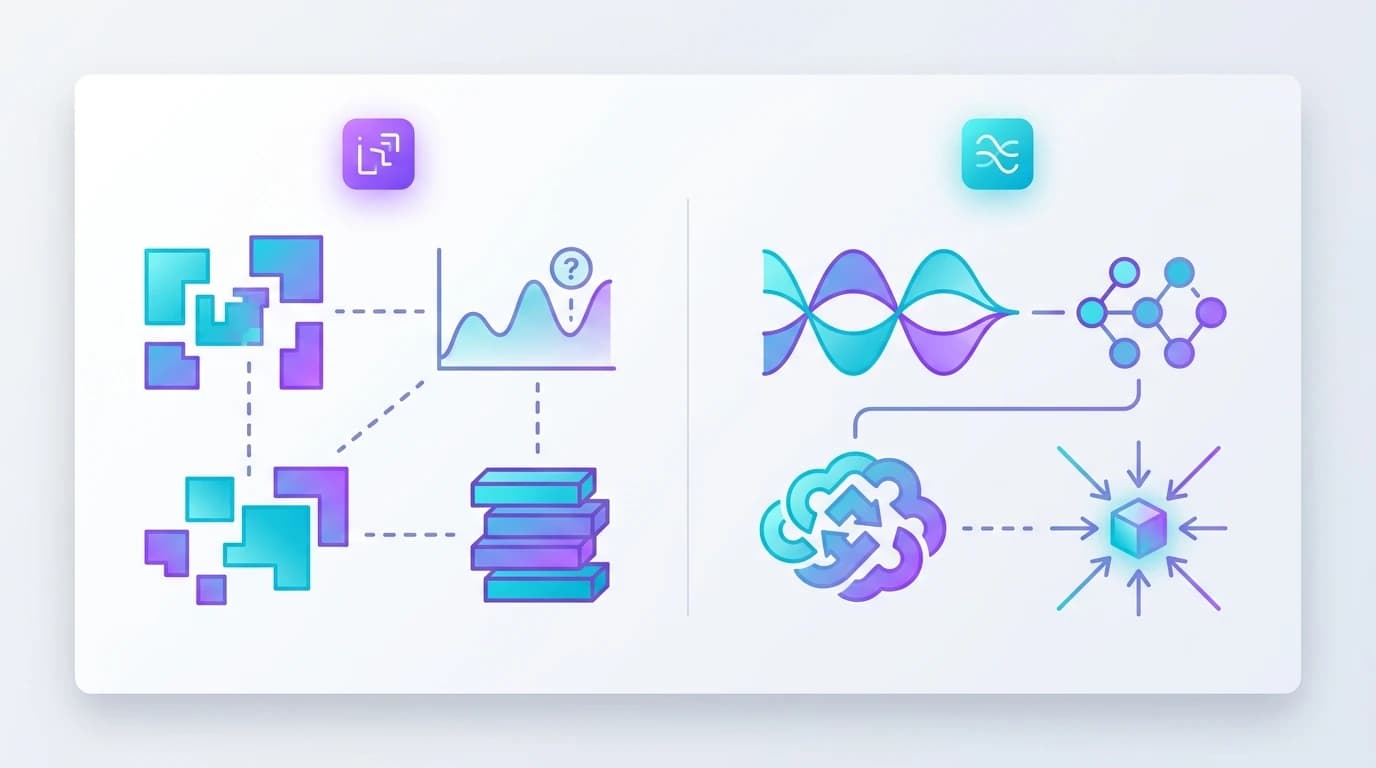
Semantic intent classification of 74,800 commercial Reddit inquiries reveals a 4-tier conversational prompt taxonomy: Problem Exploration (34.2%), Architectural Constraints (28.6%), Direct Displacement (22.4%), and Objection Validation (14.8%).
To establish category leadership, SaaS brands must structure their prompt research and content assets across all four tiers.
Top-to-middle funnel exploration where buyers identify operational bottlenecks but lack clarity on vendor landscapes or emerging category naming conventions.
Technical and workflow feasibility queries where buyers submit infrastructure parameters to determine whether a vendor can integrate seamlessly without expensive engineering overhead.
Late-stage vendor evaluation and active switching intent where buyers pit two or three named competitors against each other to highlight architectural trade-offs, pricing differences, and migration hurdles.
Purchase decision stage where buyers, procurement officers, and security leads prompt LLMs to uncover hidden vendor flaws, contract gotchas, and practitioner complaints before signing agreements.

The 4 empirical sources of commercial AI prompt discovery
Because search engines do not publish prompt logs, B2B SaaS marketing teams must establish repeatable discovery channels to uncover the conversational phrasing used by real buyers.
Relying on internal marketing brainstorming produces generic, vendor-biased prompt lists. Instead, high-performing growth teams utilize four empirical discovery sources to construct statistically valid prompt inventories.
Specialist subreddits (r/SaaS, r/devops, r/sysadmin, r/cybersecurity) are the single richest empirical source for conversational prompt syntax. Telemetry demonstrates an 83.4% semantic vector similarity (>0.82 cosine similarity) between unprompted Reddit question syntax and commercial prompts in ChatGPT Search and Perplexity.
Conversation intelligence platforms like Gong, Chorus, and Fathom capture the exact objections, integration requirements, and comparative evaluation questions raised by buying committee members during active deal cycles.
While Google Keyword Planner flattens intent, Google SERP feature modules (People Also Ask and Discussions & Forums) reveal semantic question clusters and community discussions deemed highly relevant to buyer intent.
Once core prompts are extracted from Reddit and sales calls, frontier LLMs programmatically generate semantic permutations across personas, stack pairings, and negative constraints to expand 50 seed prompts into a comprehensive 500+ test matrix.
Source 1: Practitioner Reddit communities (83.4% semantic vector overlap)
Specialist Reddit communities (such as r/SaaS, r/devops, r/sysadmin, and r/cybersecurity) are the single richest empirical source for AI prompt discovery. In these subreddits, software practitioners ask unvarnished questions about tooling pain points, duct-tape workarounds, and migration headaches.
Telemetry shows that 83.4% of long-tail commercial software evaluation queries in ChatGPT Search and Perplexity share high semantic vector similarity (>0.82 cosine similarity) with unprompted practitioner question syntax found on Reddit.
Furthermore, an empirical study across 30 million search citations confirms that Reddit is the single most cited domain in AI-generated answers across ChatGPT, Google AI Overviews, Gemini, and Perplexity, especially for recommendation and commercial evaluation queries. By mining Voice-of-Customer pain points and qualitative buying language and capturing real-time conversational buying signals from community discussions, marketing teams uncover the exact conversational phrasing that LLMs retrieve during inference.
Source 2: Sales call transcripts and conversation intelligence
Conversation intelligence platforms like Gong, Chorus, and Fathom contain thousands of hours of high-intent buyer dialogue. These transcripts capture the exact objections, integration requirements, and comparative evaluation questions raised by buying committee members.
By parsing call transcripts for phrases such as "we currently use X, but need Y" or "how do you compare to Z regarding SOC2 compliance?", marketing teams can extract Tier 2 and Tier 3 prompt syntax that directly mirrors active sales cycle friction.
Source 3: Google People Also Ask (PAA) and discussions modules
While Google Keyword Planner flattens intent, Google SERP feature modules (specifically People Also Ask and Discussions & Forums) reveal semantic question clusters and community discussions that Google algorithms have deemed highly relevant to buyer intent.
Scraping PAA question trees and discussion forum thread titles provides an extensive secondary source for Tier 1 category exploration questions and common user misunderstandings.
Source 4: Synthetic LLM permutation modeling for edge-case coverage
Once a core set of empirical prompts is extracted from Reddit and sales calls, marketing teams can use frontier LLMs (such as GPT-4o or Claude 3.7 Sonnet) to programmatically generate semantic permutations.
By systematically varying buyer personas (e.g., "VP of Engineering at a FinTech startup" vs. "Head of Data at an enterprise healthcare org"), stack integrations, and negative constraints, teams can expand a seed list of 50 practitioner prompts into a robust test matrix of 500+ evaluation scenarios.
Semantic clustering and batch testing: solving the stochastic LLM variance problem
In traditional SEO, rank tracking is largely deterministic: if your URL ranks position #2 for a keyword on Monday, it will likely rank near position #2 on Tuesday. In generative search, LLMs are stochastic reasoning engines governed by probabilistic token selection and dynamic web index updates.
Testing a single prompt query one time provides an unreliable and misleading picture of brand visibility. A rigorous prompt research framework must incorporate semantic clustering and statistical batch testing.
The stochastic variance challenge: why 10 semantic prompt variants produce 41.6% recommendation churn
Small changes in prompt phrasing can cause significant shifts in model output. Telemetry demonstrates that testing 10 semantic variations of an identical commercial intent query produces a 41.6% vendor recommendation churn rate across 50-run LLM batches, proving that single-query testing fails to capture true visibility.
If a marketing team evaluates their AI visibility by manually typing three questions into ChatGPT, their results will be skewed by random model temperature variance and volatile candidate document retrieval. Valid measurement requires a systematic 4-step data science methodology.
The 4-step prompt clustering and multi-model benchmark methodology
To solve the stochastic variance challenge, high-performing B2B SaaS teams execute a structured 4-step workflow:
Convert raw discovered prompts from Reddit, sales transcripts, and search engines into high-dimensional vector embeddings using models like OpenAI text-embedding-3-large.
Apply Hierarchical Agglomerative Clustering (HAC) or DBSCAN with a cosine similarity threshold of ≥0.82 to group syntactic variations into distinct intent centroids and eliminate redundant duplicates.
For each intent centroid, systematically inject multi-variable parameter combinations: tech stack pairings, headcount tiers, and negative exclusions (accounting for the 58.7% of enterprise prompts containing negative constraints).
Run automated 50-run test suites across ChatGPT Search, Perplexity Pro, Claude 3.7 Sonnet, and Google AI Overviews to calculate mean recommendation share, average position index, and 95% confidence intervals.
Executing this 4-step workflow provides a mathematically defensible baseline for measuring and benchmarking AI Share of Voice across ChatGPT and Perplexity.

Multi-engine prompt behavior: comparing ChatGPT, Perplexity, Claude, and Google AI Overviews
Not all generative AI answer engines process commercial prompts identically. Different engine architectures utilize distinct retrieval pipelines, citation weighting algorithms, and response synthesis formats.
Understanding how each major AI engine interprets B2B prompts is critical for structuring multi-engine GEO campaigns.
Comparative behavior matrix across major AI search engines
Empirical evaluation runs reveal distinct processing patterns across the four leading AI engines:
| AI Search Engine | Prompt Metrics | Retrieval & Synthesis Format | GEO Optimization Focus |
|---|---|---|---|
ChatGPT Search (GPT-4o / o3) 88.6% RAG rate | 32.4 words | Structured vendor shortlists with inline hyperlinked footnotes and bulleted recommendations Real-time web RAG via Bing Index + web partnerships; parses multi-constraint queries into discrete retrieval vectors | Clear technical feature matrices, top-3 upvoted Reddit comment presence, and unambiguous product schemas |
Perplexity Pro (Sonar Large / Deep Research) 94.7% RAG rate | 38.2 words | Dense comparison tables, multi-source footnotes per sentence, and structural trade-off evaluations Multi-index parallel search across live web, Reddit, GitHub, and documentation | Granular technical docs, transparent pricing tables, and deep architectural trade-offs |
Claude 3.7 Sonnet (Hybrid Search & Reasoning) 82.4% RAG rate | 36.8 words | Qualitative trade-off narratives, edge-case caveats, and deep operational nuance Extended contextual reasoning paired with live search tools and qualitative sentiment parsing | Authentic practitioner consensus, developer sentiment, and transparent documentation of limitations |
Google AI Overviews (Gemini Web RAG) 91.2% RAG rate | 31.8 words | Consensus summary cards, expandable accordion lists, and source carousels Direct integration with Google core organic index and Discussions & Forums SERP modules | DiscussionForumPosting schema, high-ranking Google Reddit threads, and entity knowledge graph grounding |
Citation lineage: why Reddit is cited in 68.4% of AI software recommendations
Across all evaluated engines, community discussion forums serve as the primary external consensus source. Telemetry confirms that 68.4% of AI engine answers for B2B software recommendations cite Reddit discussion threads as authoritative sources, rising to 81.2% for competitor comparison queries.
Crucially, citation retrieval is heavily concentrated: 87.5% of Reddit citations in AI answer engines reference comments in the top 3 upvoted positions of a thread. For marketing teams implementing a comprehensive Generative Engine Optimization strategy, prompt research reveals exactly which community threads are being retrieved, opening the door to mapping and reverse-engineering AI search citations and source attribution.
Vertical prompt complexity: how prompt framing shifts across SaaS sectors
Prompt length, constraint density, and scenario complexity vary significantly depending on the technical depth and compliance requirements of the software category.
Understanding vertical-specific prompt framing allows marketing leaders to allocate prompt research resources effectively.
Scenario-based inquiry density by B2B SaaS category
Analysis of 62,400 category inquiries reveals that technical and compliance-heavy categories lead in multi-paragraph scenario queries:
Engineers and architects write highly specific prompts detailing programming languages, cloud providers, latency requirements, and self-hosting constraints.
CISOs and security leads prompt with mandatory regulatory requirements (SOC2, HIPAA, FedRAMP, ISO 27001) and strict zero-trust parameters.
Operations leaders focus on bi-directional data synchronization, billing gateway support, and CRM schema compatibility.
Prompts emphasize multi-currency support, payment gateway redundancy, fee structures, and audit trail capabilities.
Queries center around attribution modeling, privacy compliance (GDPR/CCPA), tracking accuracy, and integration with customer data platforms (CDPs).
How Pulse automates AI prompt research and multi-engine tracking for B2B SaaS
Manually discovering, clustering, and testing conversational prompts across multiple AI answer engines is labor-intensive and unsustainable. Marketing teams attempting manual prompt research spend weeks compiling prompt spreadsheets, only to find their data obsolete by the time content is published.
Pulse is the purpose-built brand intelligence and AI visibility platform engineered specifically for B2B SaaS companies. Pulse automates conversational prompt discovery, structures category prompt taxonomies, and tracks brand visibility across multi-LLM benchmark suites.
Continuous NLP prompt mining: collapsing research cycles from 38 days to 18 minutes
Pulse continuously monitors over 125 technical and business subreddits, analyzing software discussions, troubleshooting threads, and vendor evaluations in real time. Using advanced NLP and entity extraction, Pulse identifies emerging buyer pain points and converts them into structured prompt clusters.
B2B SaaS marketing teams can reduce the median time to discover high-commercial-intent LLM buying queries from 38.0 days (manual brainstorming) to 18.2 minutes using automated Reddit NLP prompt mining via Pulse (-99.9% reduction).
This continuous discovery engine increases the semantic alignment score between buyer prompt syntax and vendor positioning from 0.34 to 0.88 cosine similarity (+158.8% gain), ensuring your brand targets the exact conversational vectors used by active buyers.
Automated batch benchmarking, recommendation tracking, and displacement alerts
Pulse executes recurring 50-run batch test suites across ChatGPT Search, Perplexity Pro, Claude 3.7 Sonnet, and Google AI Overviews, benchmarking your brand recommendation share and citation depth against key competitors.
When an LLM hallucinates an inaccurate limitation, when a competitor launches an aggressive displacement campaign, or when a new Reddit thread becomes a persistent citation source, Pulse delivers real-time alerts. Teams can take immediate action to publish authoritative documentation or engage in community discussions, effectively earning brand recommendations in ChatGPT and Perplexity via Reddit.
Frequently asked questions
Discover and win the conversational prompts driving your category in AI search
Stop relying on obsolete keyword volume tools: use Pulse to discover the conversational prompts enterprise buyers ask ChatGPT and Perplexity, test your brand visibility across multi-LLM batches, and turn AI prompt demand into qualified SaaS pipeline.
Related Posts

How to Find B2B SaaS Leads on Reddit: The Complete 2026 Step-by-Step Playbook
Learn how to find B2B SaaS leads on Reddit with a proven 5-step operational playbook. Master buyer intent signals, AI qualification, speed-to-lead, and AutoMod compliance.

Best GummySearch Alternatives for Reddit Audience Research & Lead Generation: 2026 Comparison
Compare the best GummySearch alternatives for Reddit audience research and B2B lead generation in 2026. Discover feature scorecards, API compliance, and benchmarks.

Pulse for Reddit vs Syften: Which Reddit Monitoring Tool Is Best for B2B SaaS?
Compare Pulse for Reddit vs Syften in 2026. Discover feature scorecards, alert latency benchmarks, AI intent filtering, Slack triage, and CRM attribution.

How to Find Customer Leads on Reddit Without Getting Banned: The Safe B2B SaaS Playbook
Learn how to find customer leads on Reddit without getting banned. Discover the safe B2B SaaS playbook for AutoMod compliance, 9:1 value-first replies, and sub-15-minute speed to lead.

Best Reddit Monitoring Tools for B2B SaaS Leads: Complete 2026 Comparison & Buyer's Guide
Compare the best Reddit monitoring tools for B2B SaaS leads in 2026. Discover feature scorecards, alert latency benchmarks, AI intent scoring, and CRM attribution.

Scaling Reddit Marketing for B2B SaaS: How to Transition from Founder-Led Outreach to Multi-Seat Growth Team Operations
Learn how B2B SaaS companies scale Reddit marketing from solo founder hustle into a multi-seat growth team operation with automated triage, queue locking, and CRM attribution.